

What Off-Plan Actually Means in Dubai
The whole sequence, from choosing a unit to the day you take the keys, for someone who has never done it.
Published 20 August 2026
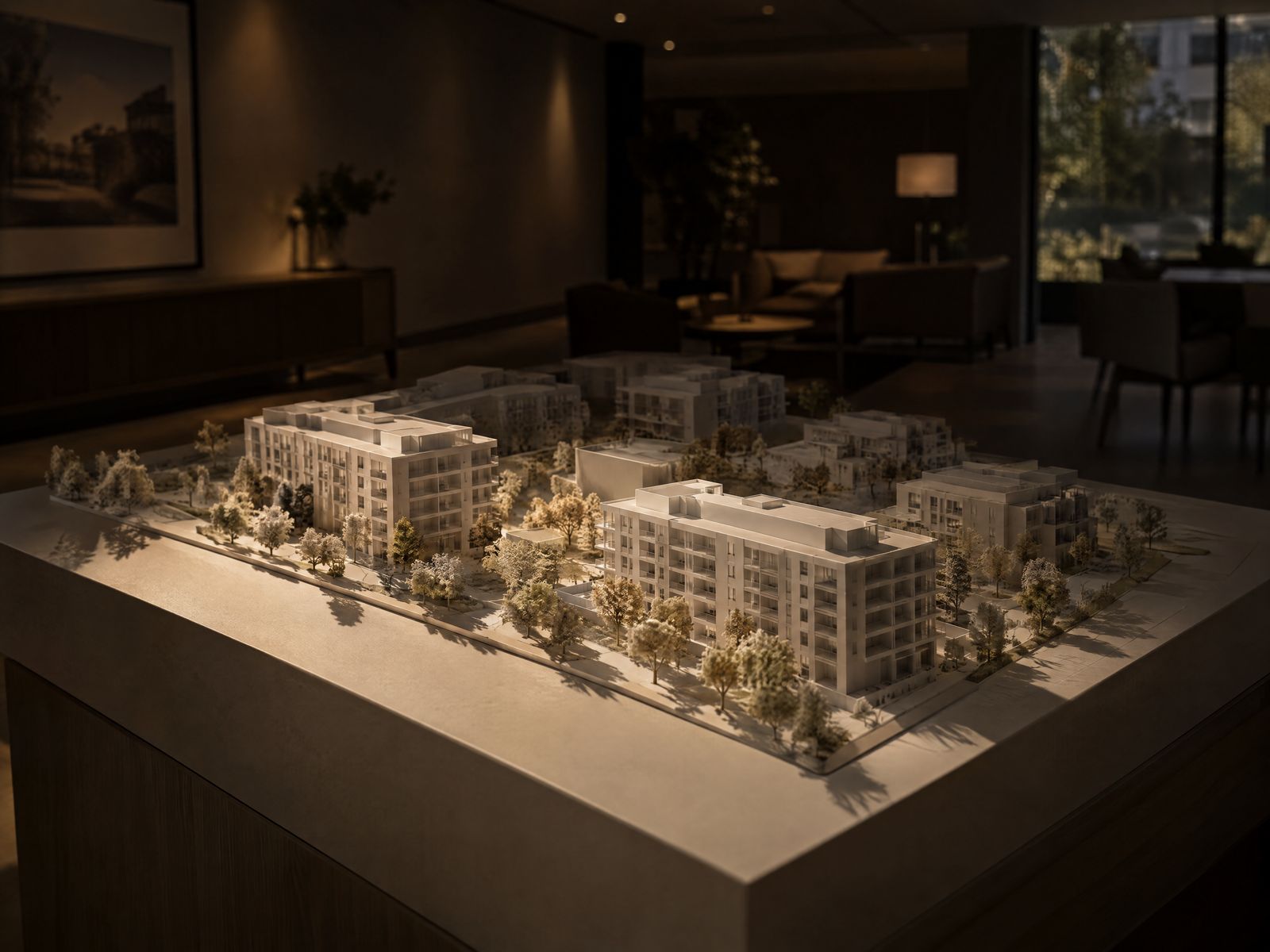
Buying off-plan means paying for a home before it exists. In Dubai the process is standardised enough to be written down as a sequence, and most of the worry around it comes from not knowing which step you are on or what you are supposed to do next.
What follows is the whole sequence, in order, for someone who has never done it. Two of our other articles go deeper into single steps: one on what escrow and Oqood protect, one on how to read a payment plan. This is the map those two sit inside.
Choosing a Unit
You are choosing from drawings, not rooms. Every image on this website is a computer render. The only Mashriq Elite project you can walk into is Floareá Residence in Arjan: 206 homes, handed over and occupied.
Ask for the floor plan with dimensions on it, the exact area in square feet, the floor level, and what the unit faces. Type letters hide a lot. At Residence the one-bedroom apartments ran from 750 to 1,003 square feet across five types, so the words "one bedroom" told you almost nothing on their own. Ask for the handover quarter and the payment plan in the same conversation, because both change what you are agreeing to.
Ask what sits above, below and beside the unit. A plant room, a lift shaft or a podium deck is easy to leave off a marketing plan and impossible to ignore once you live there.
The Reservation
When you choose a unit you sign a reservation form and pay a reservation deposit. The unit comes off availability and the developer prepares the contract.
The form should name the unit, its area, the price, the payment plan and the handover quarter. Read it before you pay. It is the first document with your name and the unit number in the same place, and it sets terms that everything after it repeats.
Four questions before you transfer anything. Does the deposit count towards the first instalment? What happens to it if you withdraw? How long does the reservation hold before the sale and purchase agreement is issued? And which account does the money go to, with a receipt naming the project?
The Sale and Purchase Agreement
The SPA is the contract. Ask for the full document with all its annexures and give yourself days with it, rather than minutes across a desk while someone waits.
Check the unit number, floor and area against the reservation form. Check whether there is a tolerance clause on the area and what it entitles you to if the finished unit falls outside it. Check the handover date and any grace period attached to it. Check the payment schedule, and whether each instalment is triggered by a named construction milestone or by a calendar date.
Then read the specification annexure. It should name manufacturers, materials, the cooling provider and the number of lifts. General adjectives in a contract are decoration — nobody can enforce them. Read both default clauses too: the one that applies if you miss a payment, and the one that applies if the developer misses the handover date.
Oqood and Escrow
Two registrations follow the SPA. Your purchase is recorded with the Dubai Land Department through Oqood, which puts your interest in the unit on the record before the project is finished. Your payments go into a RERA-regulated project escrow account, from which money is released to the developer against verified construction progress.
Your part here is small and worth doing properly. Ask for the escrow account details in writing before the first instalment. Ask for the Oqood certificate once it is issued. Keep every payment receipt in one folder with the SPA. What each of those two mechanisms protects, and where each one stops, is the subject of a separate article.
Paying While It Is Built
From here the payment plan runs the relationship. Floareá Breeze is sold on 30/70: 30 per cent across construction, 70 per cent at handover. Floareá Skies and Floareá Oasis are offered on a standard 30/70 or a 1 per cent monthly variant, and all three carry a post-handover option of 30/35/35. Each plan totals the same amount. They differ in when it is due.
Your job is to pay on schedule and to keep asking for progress. Ask how often construction updates are issued and in what form. Ask whether you can visit the site: access during works is restricted for safety, but an escorted visit at a sensible stage is a normal request. Ask to be told in writing when the handover quarter moves. Handover quarters do move in this market, and the developers worth buying from say so early.
Snagging, Handover and the Transfer Fee
Before you accept keys you snag the unit. That means walking it against a list and writing down every defect: doors and drawers that catch, water pressure, drainage, the air conditioning in each room, sockets, sealant lines, tiles and paint checked against the specification annexure. Many buyers hire an independent snagging inspector, and the report usually justifies the fee. Submit the list, let the developer fix it, then re-inspect before you sign anything that accepts the property.
At handover you pay the balance and the registration costs. The Dubai Land Department transfer fee is 4 per cent of the purchase price. The title deed is issued in your name, the service charge begins, and the utility accounts move to you. There is no annual property tax and no capital gains tax on residential property in Dubai. Property valued at AED 2 million or more can support a Golden Visa application, on terms the Land Department sets and updates.
One closing note, so the map is not oversold. We have taken this sequence to the end once: Floareá Residence, 206 homes in Arjan, handed over and lived in. Five more projects are under construction and not one of them has been handed over yet. Everything you have seen of those five is a render.